
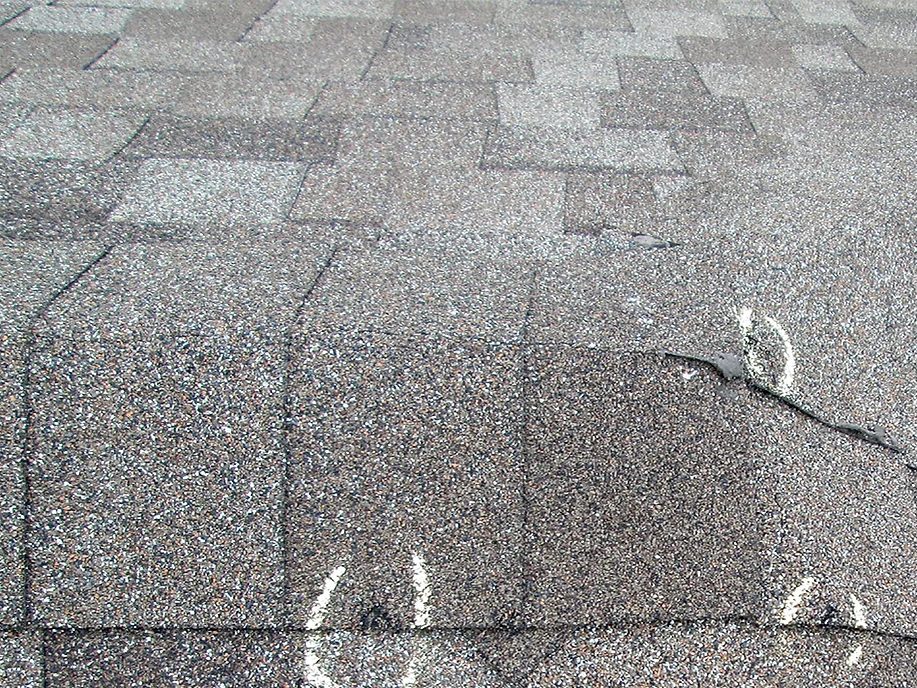
Midwest hail damage · John Beal Roofing since 1947
How to Find Out If Hail Hit Your Address
You were at work, out of town or asleep, and now a neighbor says hail hit the block. Here's how to confirm a storm actually reached your house, and on which date.
Short answer
To find out whether hail hit your address, search the National Weather Service storm reports and NOAA's Storm Events Database for your county and the likely date, check radar-estimated hail size for that storm, then compare those records with evidence at the house: fresh dents in gutters, downspouts, vent caps and AC condenser fins. Public records narrow down the date. The dented soft metals prove the storm reached your roof. Insurers and roofers also buy address-level hail reports built from radar data.
Why the date of loss carries the claim
Every insurance claim needs a date of loss. The policy in force on that day is the one that pays, the deductible written on that day is the one that applies, and the reporting clock starts from it. Pick the wrong day and an adjuster can find no storm on record, which is an easy reason to deny. Pick the right one and the rest of the file lines up behind it. Our page on how long you have to file a hail claim covers the timing rules that follow from that date.
Public records you can search for free
Three sources do most of the work. The Storm Prediction Center posts daily reports of hail, damaging wind and tornadoes sent in by trained spotters, emergency managers and the public, each with a time, a location and a reported stone size. The National Weather Service office covering your area publishes those local storm reports too, and after a big event it often posts a written summary. NOAA's Storm Events Database files verified events by county and reaches back to the 1950s, though new entries can take a few months to appear. Search your county across a date range, then look for reports close to your street.
Radar estimates and their limits
A spotter report is one dot on a map. Hail falls in swaths, often a few miles wide and many miles long, and plenty of those swaths cross subdivisions where nobody phoned anything in. Radar fills that gap. NOAA's radar-derived hail size estimate, usually labeled MESH, maps the largest stone a storm likely produced along its path. It's useful and it's imperfect. It estimates what was up in the cloud rather than what landed on your shingles, and it can miss in either direction. Treat it as a strong pointer, not proof.
Commercial hail reports
Carriers, independent adjusters and many roofing companies buy address-specific hail reports from private weather data services. Those reports blend radar data with ground observations and estimate the likelihood and size of hail at one address on one date. Your adjuster may already have one in the file before the inspection. If it shows small hail at your address while the roof shows large-hail damage, that gap needs an explanation, and the explanation usually lives on the house.
Reading the house for storm evidence
Soft metals keep a record. Aluminum gutter faces, downspout elbows, box vent caps, condenser fins and painted window wraps all take dents from stones above a certain size, and a fresh dent shows bright, unoxidized metal for a while afterward. Dent diameter gives a rough idea of stone size. The sides of the house carrying the dents show which direction the storm came from, and that should match the radar track. Our pages on screens, wraps and condensers and on roof vents and skylights show what we photograph and why.
Notes worth making while it's still hailing
The strongest record is the one you make during the storm or right after it. A phone photo of stones on the patio beside a coin or a tape measure captures size and date in a single shot. A short video of hail bouncing off the deck records the time. Mark the date on a calendar even if nothing looks wrong, because roof damage rarely shows from the yard and the question may not come up until a neighbor's adjuster visits weeks later. Keep the original files. Screenshots and copies passed through a messaging app can lose the embedded date, and that date is the part an adjuster cares about most.
Putting the record together
When we inspect for a possible claim, the pieces go into one file: the public reports nearest your address with their times, the radar estimate for that date, the dented metals photographed next to a scale reference, and the hits counted in a test square on each slope. That file answers the adjuster's questions before they get asked. It also tells us when the answer is no. If the nearest report is fifteen miles off and the gutters are clean, we'll say so, and you'll skip a claim that was never going anywhere. If a carrier has already turned you down over the date, our page on denied hail claims lays out what comes next.
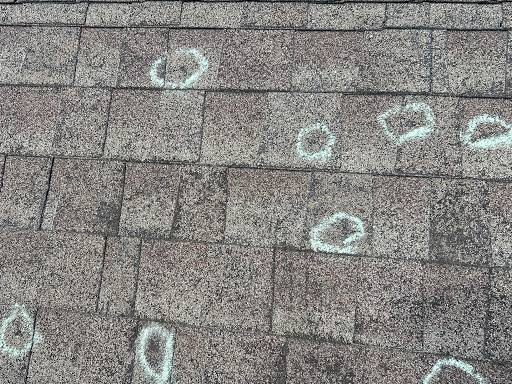
Two storms, one roof
A Midwest roof can take hail twice in one season. Each storm is its own date of loss and, under most policies, its own deductible, so tying damage to the right storm matters. It gets harder once the dents overlap. Older dents dull and oxidize, fresh ones stay bright. Spotter reports and radar estimates for both dates help sort them out, and we lay out the evidence for each storm side by side before you sit down with the insurance adjuster.
Frequently asked
What if there's no storm report anywhere near my house?
That doesn't mean hail missed you. Plenty of swaths cross areas with no spotter watching. Radar estimates and the dents on your soft metals can establish the storm when ground reports are thin.
Can I check whether a house I'm buying has been hit by hail?
You can search the public records for that county over the past several years, and a roof inspection will turn up impact marks and dented metals. Ask the seller whether any claims were filed and whether the roof was replaced afterward.
How far back do public hail records go?
NOAA's Storm Events Database holds county-level hail entries back to the 1950s. Daily spotter reports from the Storm Prediction Center are easiest to browse for recent years, and radar-based size estimates cover a shorter span than either.
Do I need to know the storm date before you inspect?
No. We inspect first and help pin down the date from the evidence and the records. If you remember the night stones hit the house, write it down, because it narrows the search a lot.
Will the adjuster use the same weather data?
Often, plus their own address-level report. If your evidence and their report disagree, bring photos of the dented metals and the test squares to the inspection. A dated dent on a vent cap is hard to argue with.
Related reading
Free Hail Damage Inspection
No cost, no obligation, and you get the photographs either way.
Free inspection, documented for your claim.
Call one number from any of our forty Midwest metros and a live dispatcher answers, day or night.